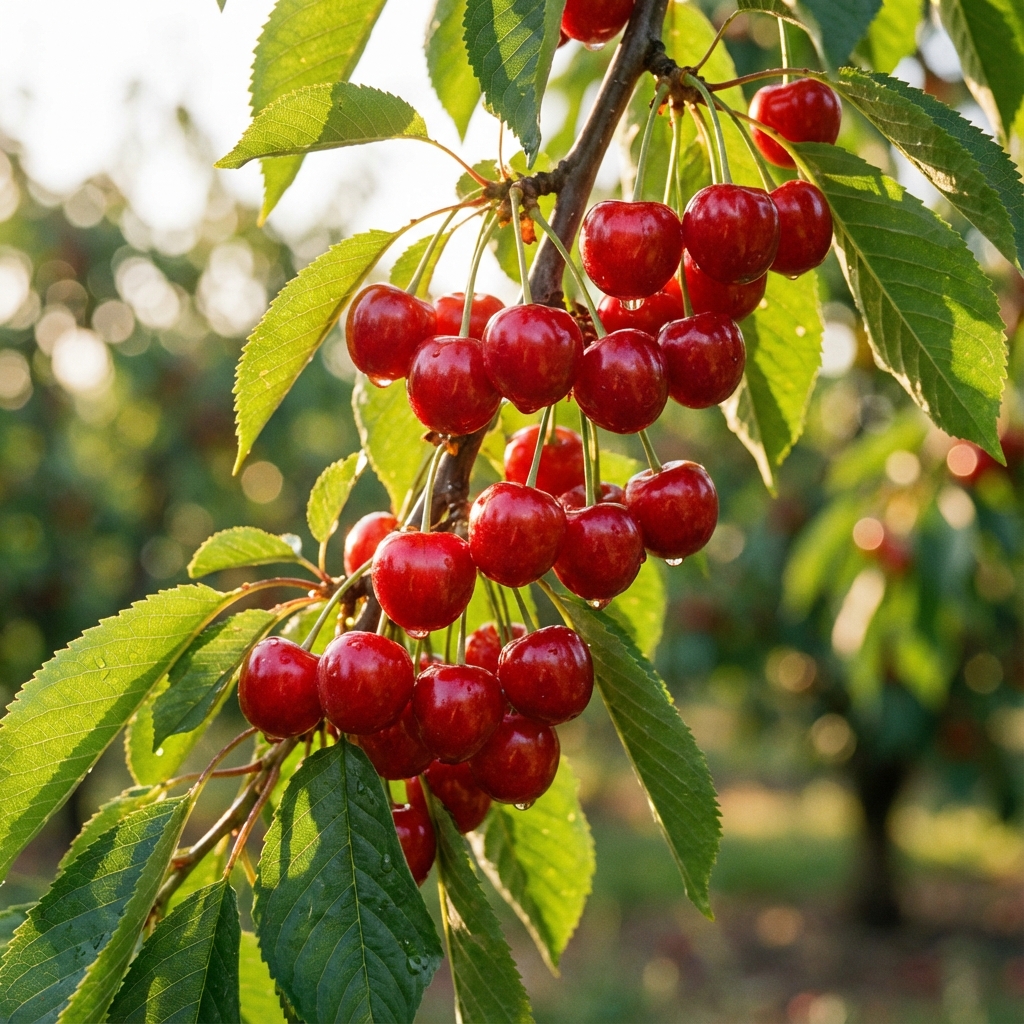
Cherry
General Information About Cherry
Cherry (Prunus avium) is an economically valuable fruit of the Rosaceae family. Widely grown in Turkey, especially in Marmara and Aegean regions. Pinkish-white flowers bloom in April-May.
Fruits usually appear in clusters of two or three. Bright red at maturity. Short shelf life, sensitive to cracking and worms after rain.
Trees start bearing fruit in 5-6 years and can live 60-70 years. Average yield 20-50 kg/tree. Turkey is a gene center for sweet cherry, with varieties like ancient local ones and modern Napolyon/Ziraat 0900.
Origin: Giresun, South Caucasus, Caspian, NE Anatolia. "Gezlevi Cherry" from Toros Mountains is famous.
Consumed fresh or used in jams, compotes, and canning.
Cherry Rootstocks
MaxMa 14
Semi-dwarf. Compatible with almost all varieties. 65-70% vigor of Mazzard. Resistant to heavy soils, chlorosis, bacterial canker. Increases yield and quality.
Cab 6 P
60-70% vigor. Resistant to heavy soils and cold. Good for restricted irrigation. Induces fruiting 3 years earlier than standard.
P-HL-C
About 50% vigor, suitable for high density. Tolerates poor soils but needs irrigation.
SL-64
Mahaleb selection, semi-dwarf. Good for calcareous and dry soils. Not for heavy/wet soils.
Climate and Soil Requirements for Cherry
Climate Requirements
Cold-hardy but sensitive to late spring frosts during bloom. Frost pockets must be avoided.
Soil Requirements
Prefers deep, well-drained, medium-texture, organic-rich soils. Heavy clay and high water table affect roots negatively. pH 6–7.5 is ideal.
Cherry Özellikleri
- Sertifikalı ve İsmine Doğru
- Yüksek Verim Potansiyeli
- Virüsten Ari Üretim