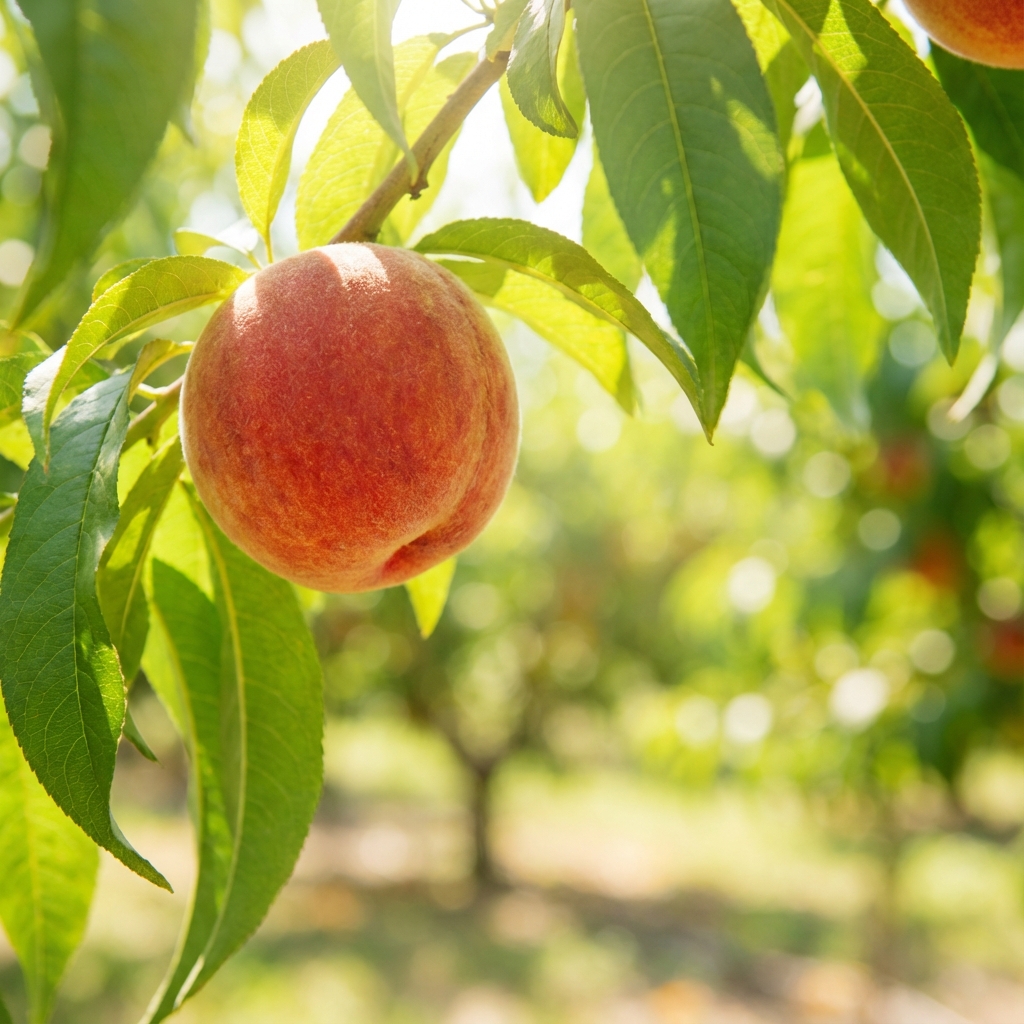
Peach
General Information About Peach
Peach (Prunus persica) belongs to the Rosaceae family and is an economically valuable fruit consumed during summer months. Originating from East Asia and China, the peach has been a symbol of longevity and immortality throughout history. It spread from China to West Asia and then to Europe; reaching Europe via Iran, it was named Prunus persica by the Romans.
The peach tree loves temperate and warm climates. It is a short-lived fruit tree, living on average 25-30 years, and reaches a maximum height of 6-7 meters. Its leaves are long, pointed, dark green, and hairless. Its pink flowers blooming in spring are quite showy.
The peach fruit is juicy, sweet, and aromatic. It is divided into two main groups based on skin texture:
- Fuzzy Peach
- Nectarine (Smooth-skinned)
Based on the separation of the pit from the flesh, they are classified as freestone and clingstone. Freestone peaches are generally preferred for fresh consumption.
Peach is highly nutritious. 100 grams of fresh peach contains on average:
- 7–12 g natural sugar
- B group vitamins (Thiamine, Riboflavin, Niacin)
- 2–20 mg Vitamin C
- Vitamin A
Besides fresh consumption, it provides significant raw material for the agricultural industry in juice, concentrate, pulp, drying, freezing, jam, and marmalade production.
In Turkey, peach can be grown in almost every region, especially in Marmara (Bursa) and Mediterranean regions, except for a few provinces like Muş, Ağrı, Sivas, Yozgat, and Siirt. With suitable microclimate conditions, production is possible even in these provinces. Turkey is among the leading countries in world peach production.
Peach Rootstocks
GF 677 (Peach × Almond Hybrid)
A vigorous rootstock. Highly resistant to calcareous, high pH, and poor soils. Suitable for replanting in areas where peaches were previously removed. Not recommended for heavy and water-retentive soils due to susceptibility to root-knot nematodes. It increases fruit yield and quality.
Cadaman
Vigor similar to GF 677. More resistant to heavy soils and root-knot nematodes. Moderately tolerant to calcareous soils.
GxN 15 (Garnem)
Adaptable to calcareous and heavy soils, resistant to iron chlorosis and root-knot nematodes. Can be safely used in replant areas. Has positive effects on fruit yield and quality.
Success in peach cultivation can be increased by choosing almond-based rootstocks for high-lime soils and plum rootstocks for relatively heavy soils.
Climate and Soil Requirements for Peach
Climate Requirements
Major factors limiting peach cultivation are low winter temperatures, winter chilling requirements, late spring frosts, and insufficient summer heat. Buds and shoots are damaged when winter temperatures drop to -18 / -20 °C. Since it blooms early, it is sensitive to late spring frosts. In regions with low summer temperatures, fruit ripening is delayed and yield decreases.
Soil Requirements
Peach prefers deep, well-drained, sandy-loam, alluvial, and easily warming soils. Soil pH should be between 6–7. Successful results can be achieved in sandy soils with adequate irrigation and balanced fertilization.
In heavy clay and poorly drained soils, growth weakens; gummosis, leaf yellowing, and fungal diseases are frequently observed.
Peach Özellikleri
- Sertifikalı ve İsmine Doğru
- Yüksek Verim Potansiyeli
- Virüsten Ari Üretim