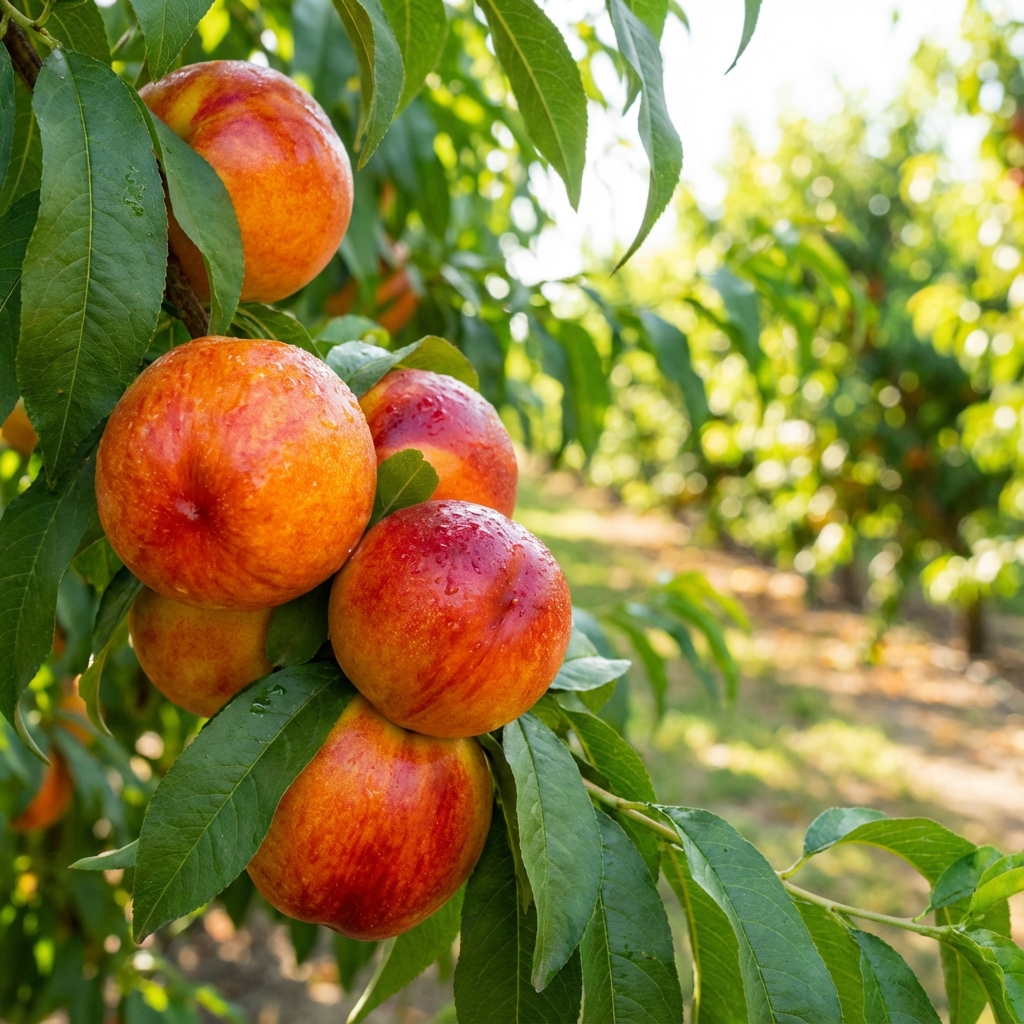
Nectarine
General Information About Nectarine
Nectarine (Prunus persica) is a fruit of the Rosaceae family with high nutritional and economic value. Botanically, nectarine is a smooth-skinned variety of peach, not a separate species. Originating from East Asia and China, it has been a symbol of longevity.
The nectarine tree loves temperate and warm climates, living 25-30 years on average. It is not very long-lived and usually reaches 6-7 meters in height. Its showy pink flowers bloom in spring.
Nectarine fruit is juicy, sweet, and aromatic. Its most distinct feature is its smooth, shiny skin. It has a single hard pit. Classified as freestone (pit separates easily) and clingstone (pit adheres to flesh). Freestones are preferred for fresh consumption.
Although previously thought to be from Iran due to its botanical name, research has shown it is not wild there. Today, its East Asian origin is certain.
Nectarine is grown widely worldwide, except in England and northern countries in Europe. Introduced to America by the Spanish in the 16th century. Major producers include Italy, USA, China, Greece, Spain, France, Turkey, etc.
100 grams of fresh nectarine contains on average:
- 7–12 g natural sugar
- B group vitamins
- 2–20 mg Vitamin C
- Vitamins A and B
Nectarine Rootstocks
GF 677
Vigorous rootstock. Highly resistant to calcareous and poor soils. Suitable for replant areas. Sensitive to nematodes.
Cadaman
Similar vigor to GF 677. More resistant to heavy soils and nematodes.
GxN 15 (Garnem)
Adaptable to calcareous soils, resistant to iron chlorosis and nematodes. Good for replanting.
Almond-based rootstocks are preferred for high-lime soils, and plum rootstocks for heavier soils.
Climate and Soil Requirements for Nectarine
Climate Requirements
Limiting factors are low winter temperatures, chilling requirements, late spring frosts, and insufficient summer heat. Risk of damage at -18 / -20 °C. Sensitive to late spring frosts due to early blooming.
Soil Requirements
Nectarine prefers deep, well-drained, sandy-loam, alluvial, and warm soils. pH 6–7 is ideal. Careful irrigation and fertilization allow growth in sandy soils.
Heavy clay and poor drainage cause gummosis and diseases.
Nectarine Özellikleri
- Sertifikalı ve İsmine Doğru
- Yüksek Verim Potansiyeli
- Virüsten Ari Üretim